
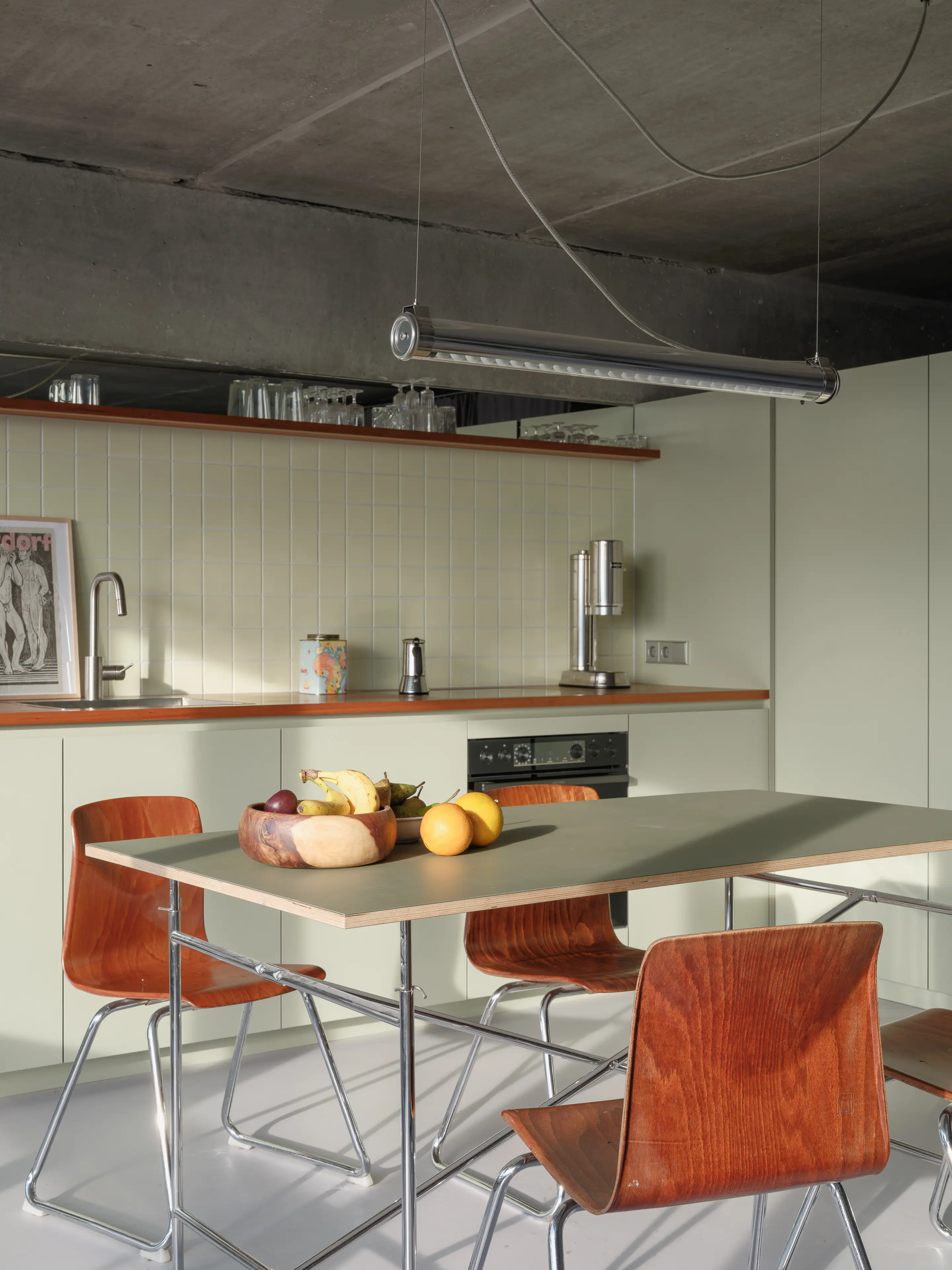
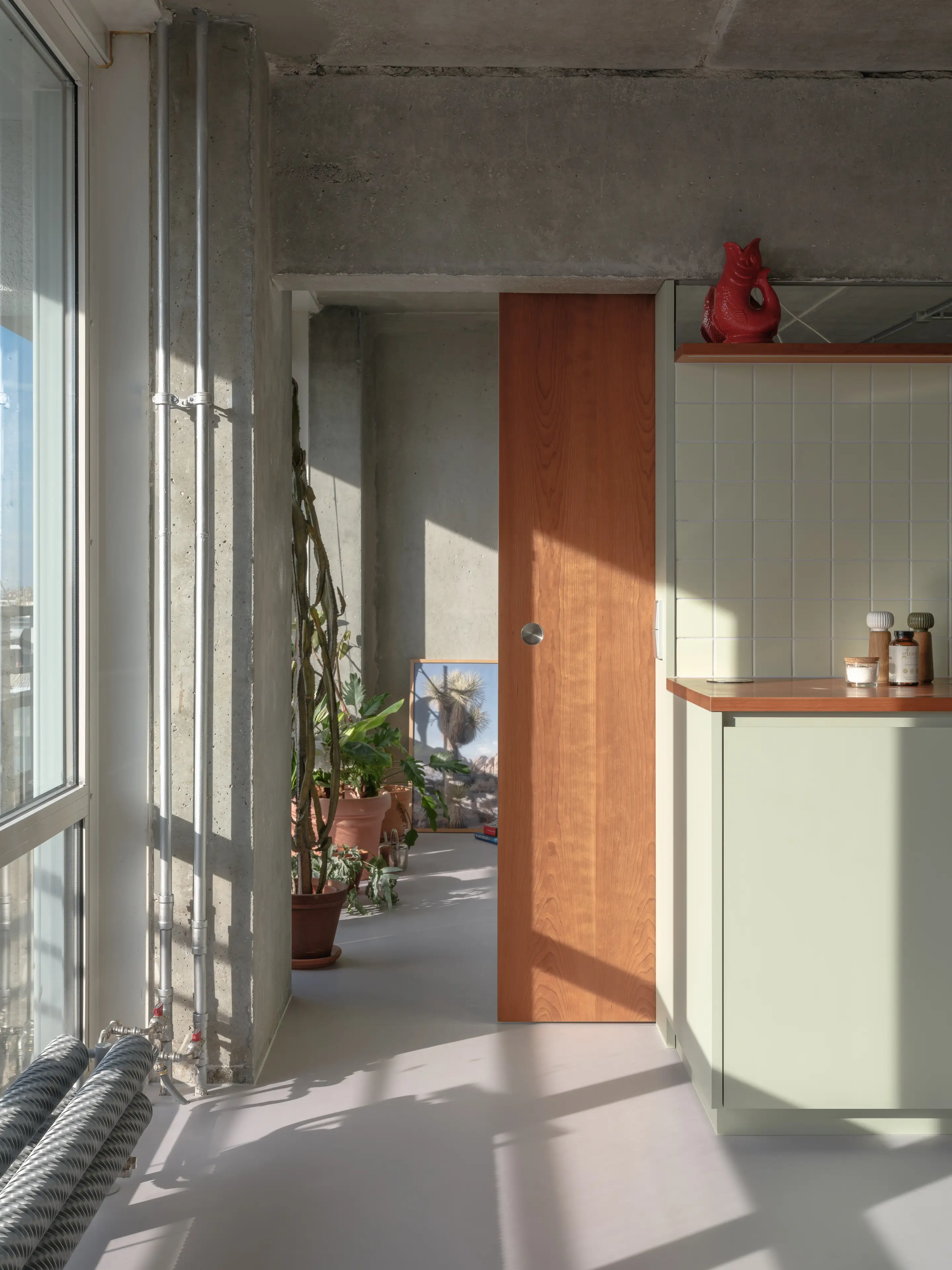
A stabilizing core, a spatial skeleton, and a panoramic view over Berlin, an immense urban backdrop.
We understand the redesign of this 1970s apartment in the spirit of Paulo Mendes da Rocha's interventions in his apartments at the Edifício Jaraguá in São Paulo: as an oasis above the city. A place shaped by ceiling fans and the evaporative cooling of surrounding plants—a form of cohabitation on the 15th floor.
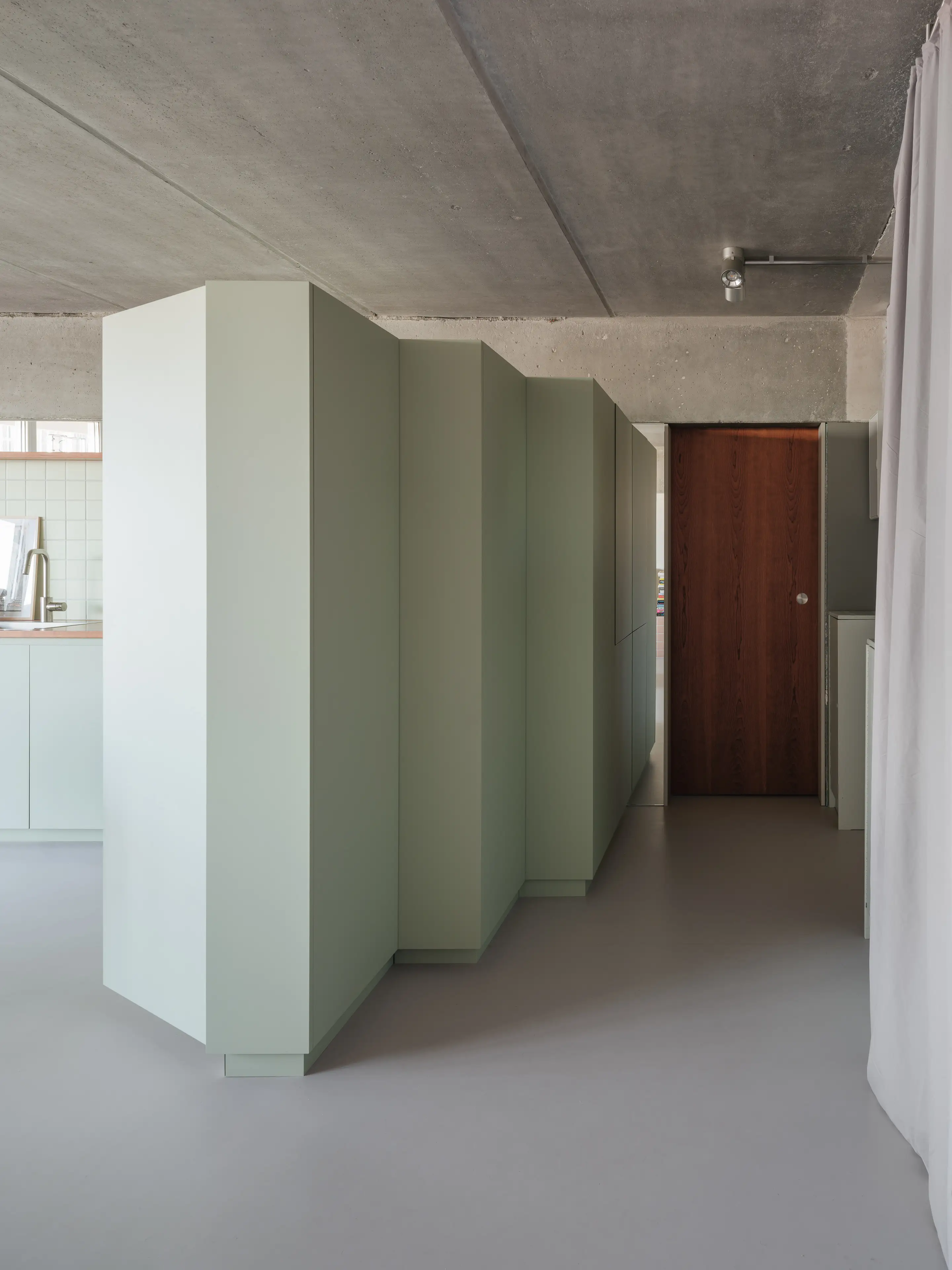
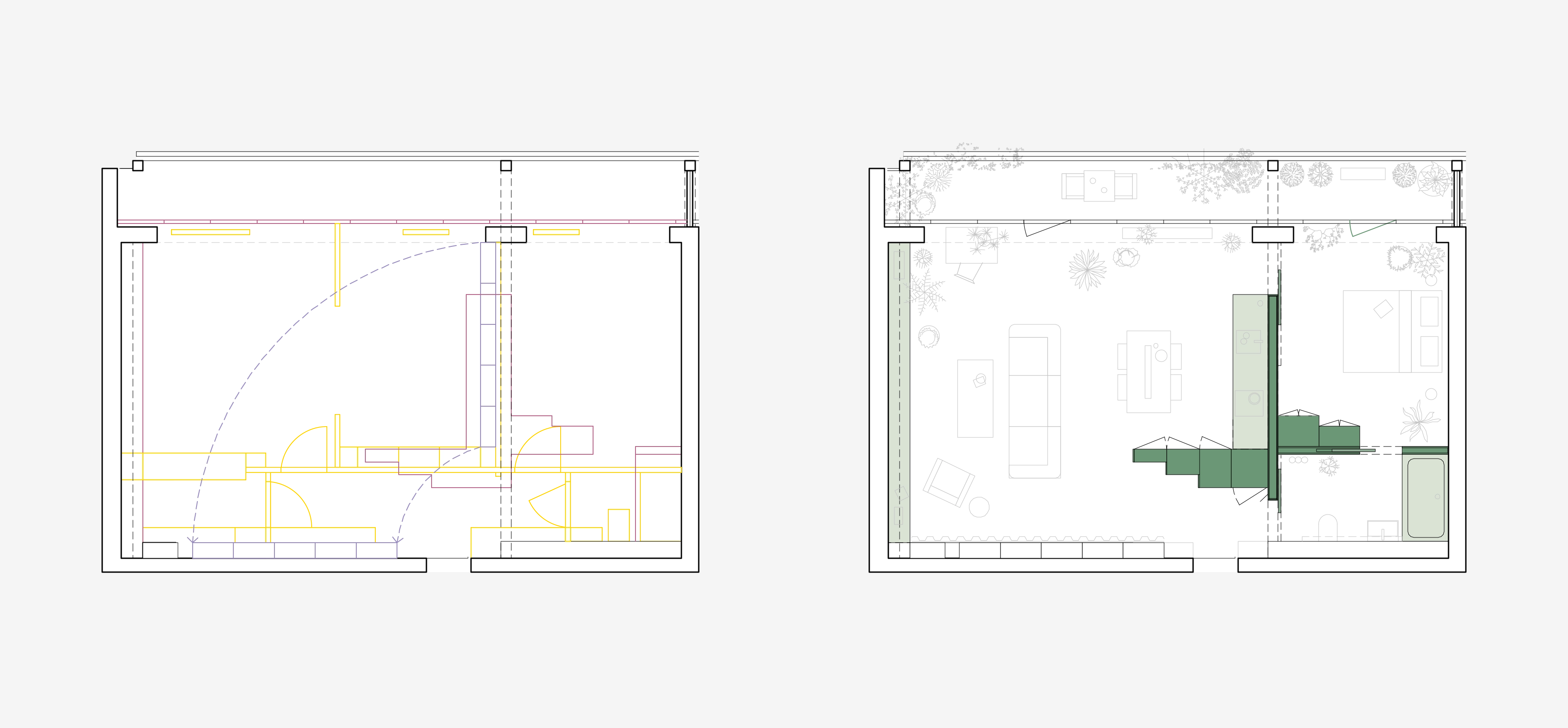
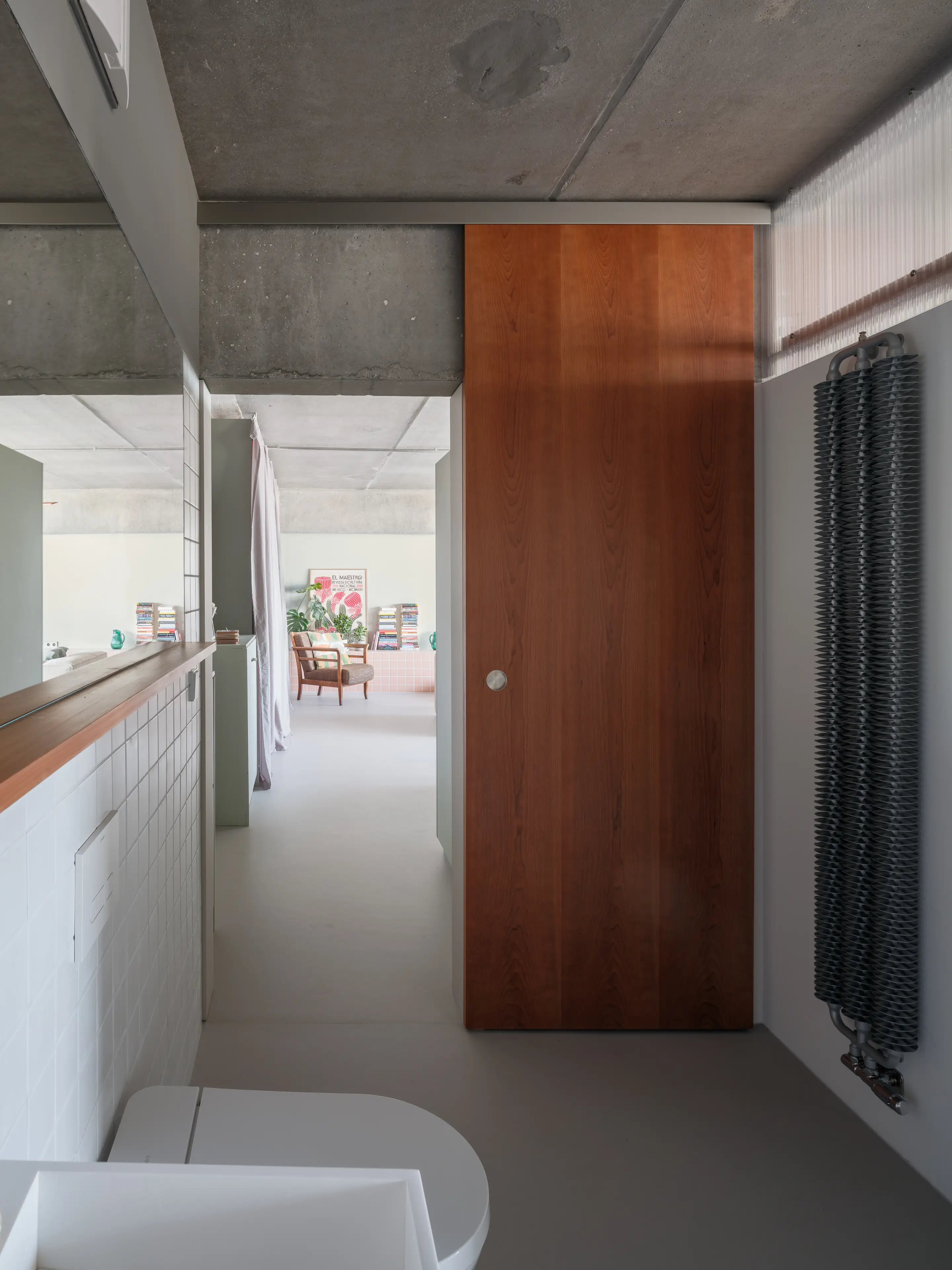
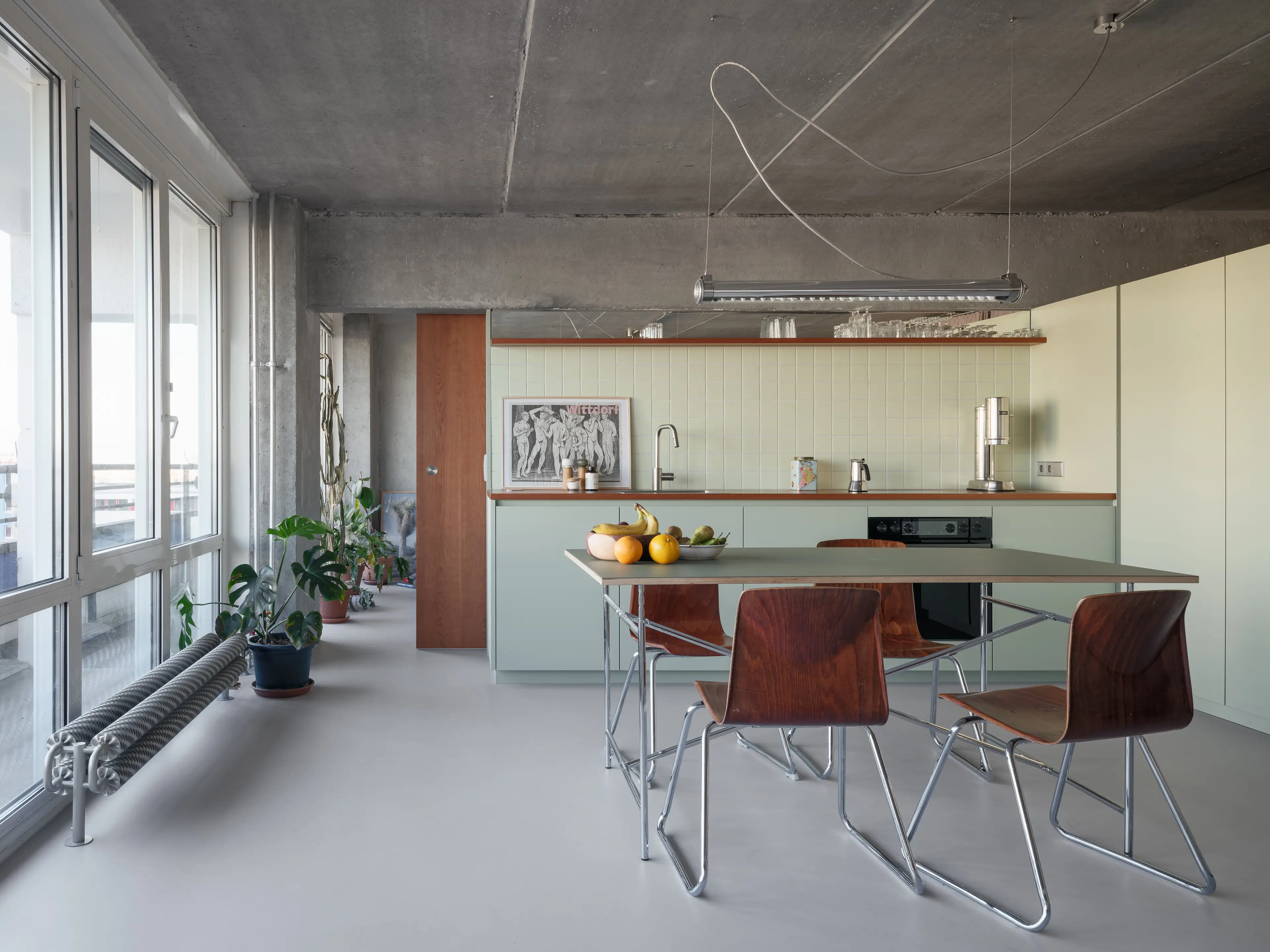
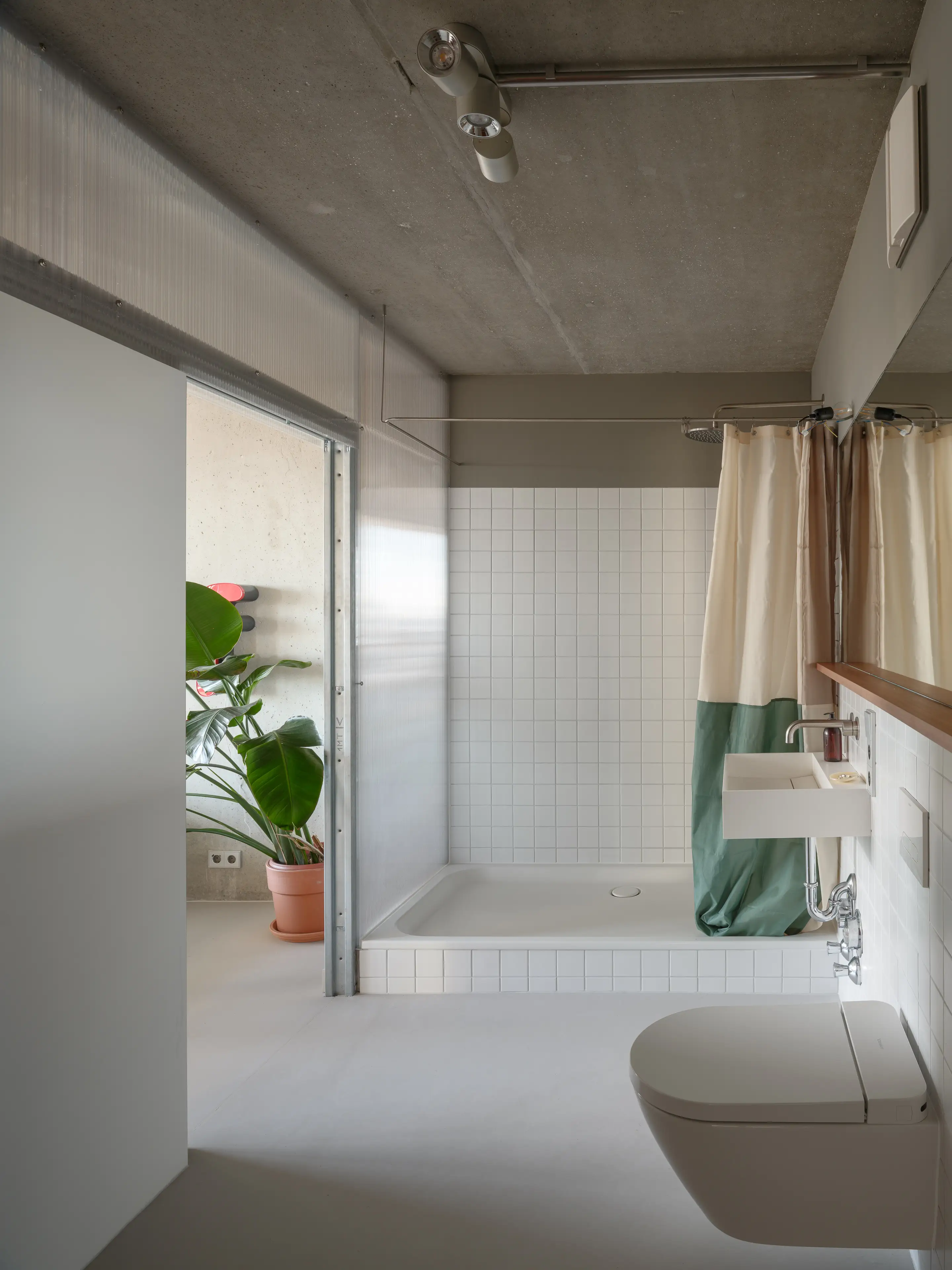
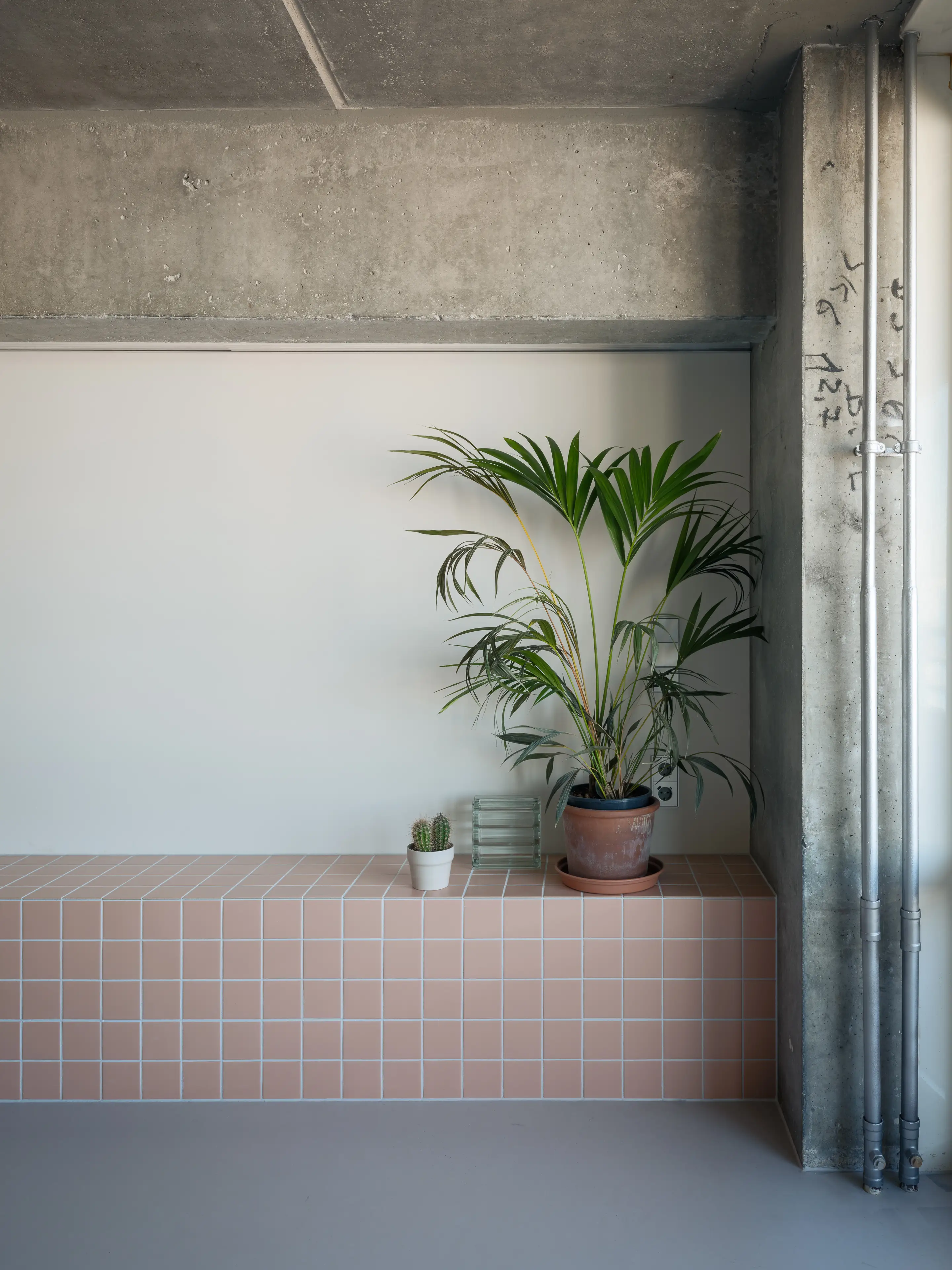
The fragmented three-room layout with its internal corridor, windowless kitchen, and enclosed bathroom was removed. In its place, we introduced a central core, a tiled bench that mirrors the beam, and lowered the windows to create floor-to-ceiling openings framing Berlins cityscape.
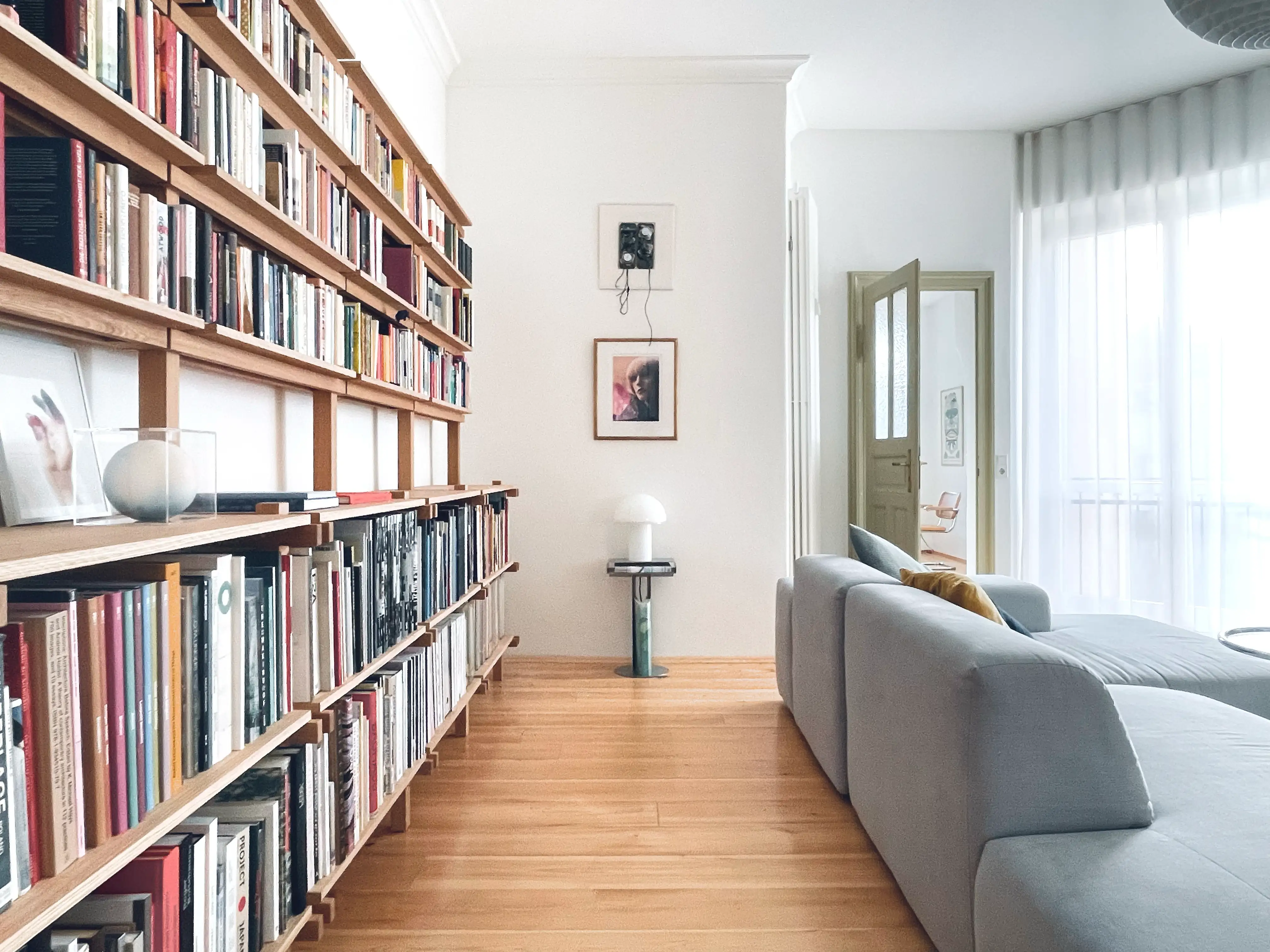
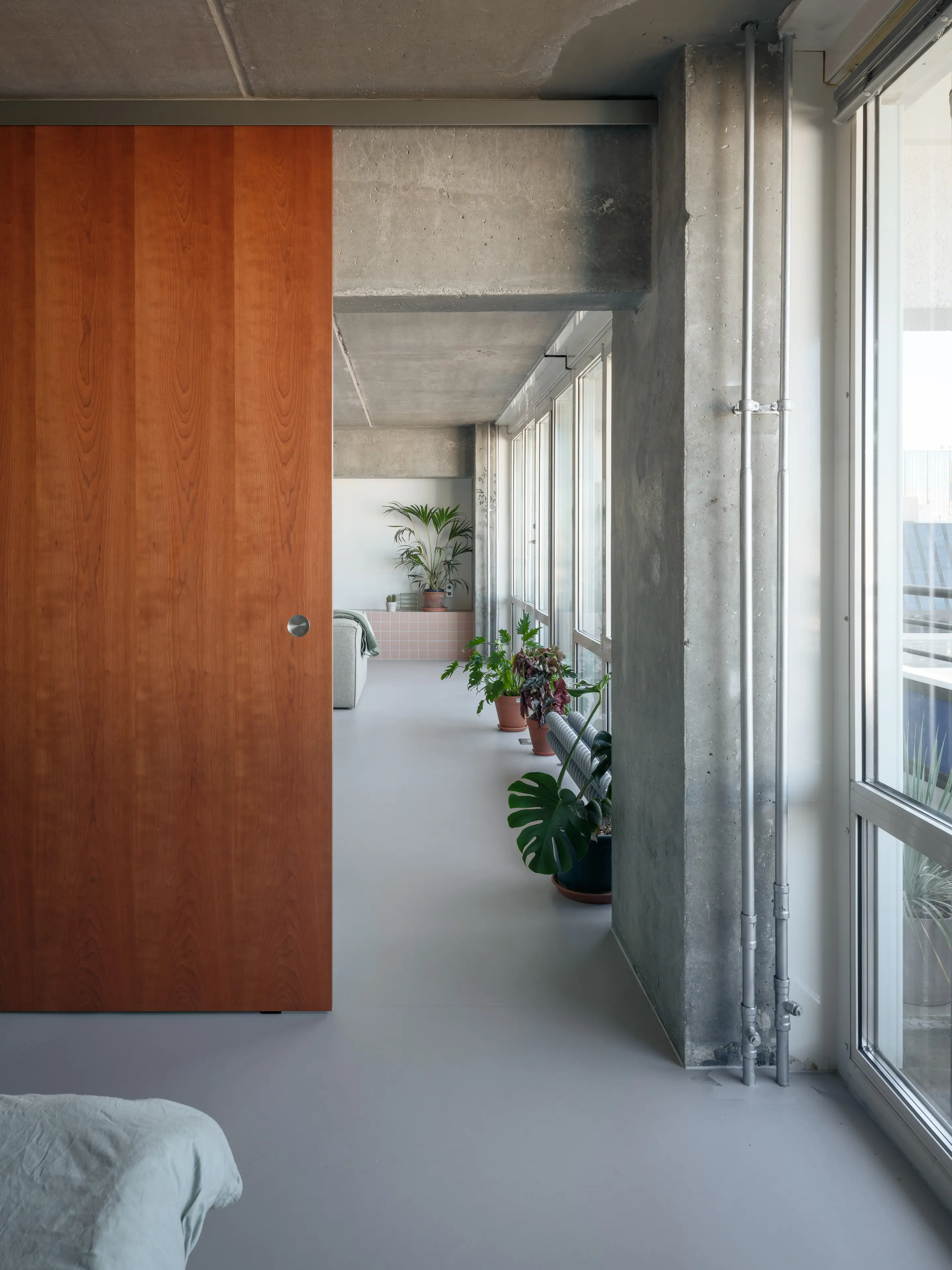
We embraced and preserved as found built-in cabinetry, integrating it into the new layout. Turned 90 degrees and placed parallel to the inner wall a curtain now allows the contents to be revealed or concealed as needed. The tone of the wood set the direction for the material palette, with all timber elements in American cherry finished with oil.
An inserted core interlocks with the four rooms, much like the modular façade elements of Friedrich Kracht found on the ground floor. Just as in Mendes da Rocha's work, this creates a continuous loop through the apartment, which can be zoned as needed through three sliding doors. We admire the tiles of Higienópolis and reinterpret them here in a range of colors, giving each room its own distinct character.